
Do People Speak English in Taichung? What to Expect (2026)
September 19, 2026・TC Time Walk, Taichung
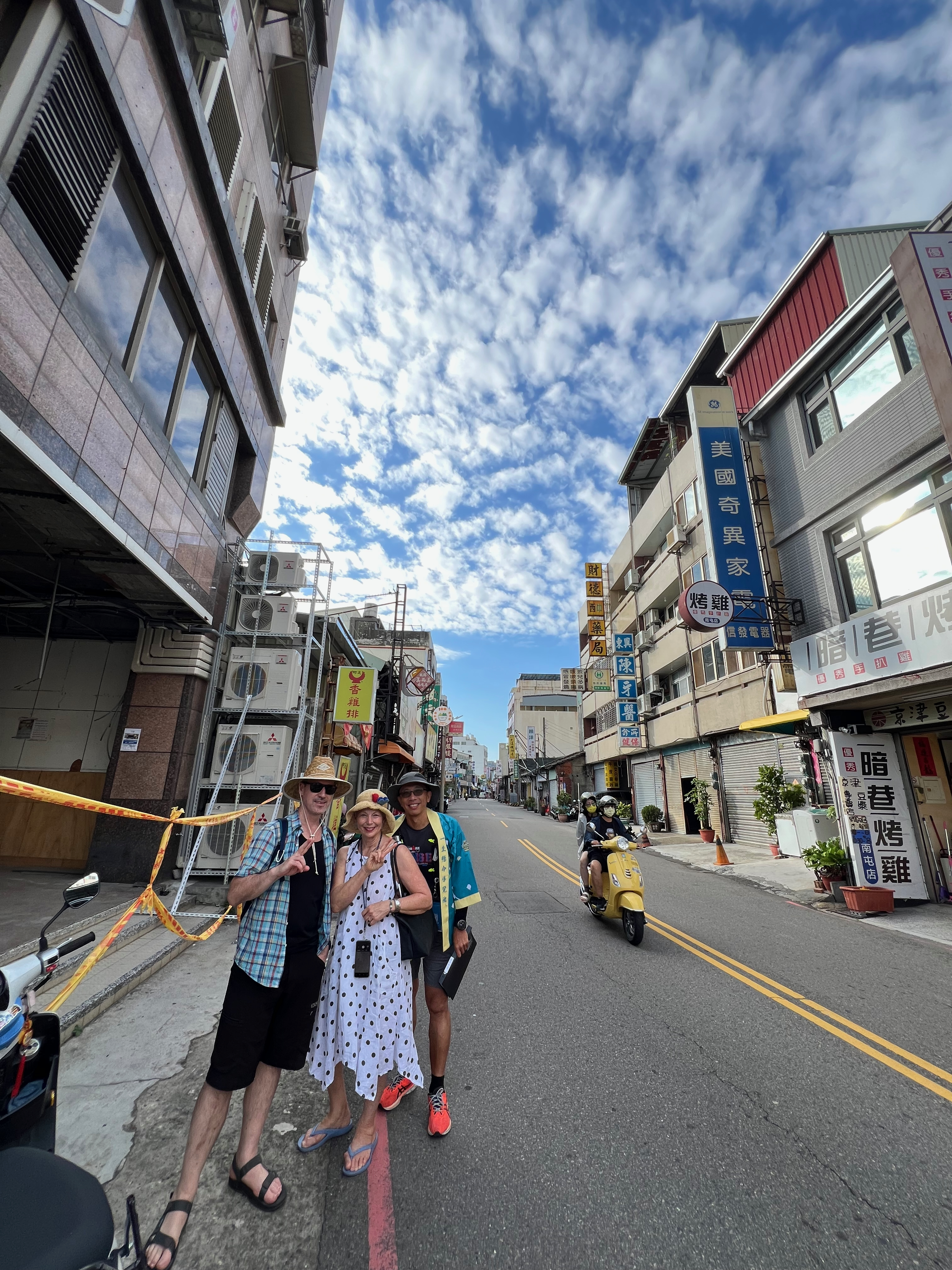
Some, and less than you might expect in a city this size. That is usually fine. In Taichung you will find English at train stations, on the high speed rail, at hotel front desks, in chain cafes and with most people under about thirty. You will find very little of it in a morning market, a family-run noodle shop, or on a city bus. Almost nobody is fluent, almost everybody tries, and the gap between those two facts is smaller than it sounds. This guide covers where English actually works, what happens when it does not, and what is worth preparing.
Quick facts
- Where English is reliable: railway and high speed rail stations (the HSR is the fast train that runs down Taiwan's west coast), the airports, hotels, chain coffee shops, convenience stores and the larger museums
- Where it usually is not: traditional markets, older family-run food shops, city buses, small pharmacies
- Signs: station names, road signs and street names are written in the Latin alphabet as well as Chinese, so finding your way on foot is much easier than holding a conversation
- Menus: chains often have English or photos; small shops in the old town, meaning the blocks around Taichung Station, often have neither
- Your phone: a camera translation app handles printed menus well and handwritten ones badly
- What to prepare: nothing you have to pay for. A translation app and your hotel address saved in Chinese characters cover most of it
Where will English definitely work?
Transport is the easy part. Station signage is bilingual, ticket machines have an English mode, and announcements on trains are usually repeated in English. If you can read a departure board at home, you can read one here.
Hotels are the next safest place. Front desk staff at anything above a hostel generally handle English well, and they are the right people to ask for help with a phone call, a taxi, or a restaurant booking. This is worth remembering: your hotel's front desk is the best free interpreter you have access to all day.
Convenience stores are a third. They are on almost every block, and the transaction barely needs language, because the total appears on a screen facing you. Staff may ask a question or two at the counter, usually about a bag or a receipt. Nodding or shaking your head resolves it.
Where will it not work, and what happens then?
Markets, old shops and buses. In a traditional market the sellers are often over sixty, working fast, and have no reason to have learned English. On a city bus the driver is driving.
What happens next is the part travellers do not expect: almost nothing goes wrong. People point. Shopkeepers turn a calculator around to show you the price, or type the number into a phone. If someone cannot answer you, they will often find somebody who can, or simply walk you to the place you were asking about rather than try to explain the way.
You should also expect to be treated well while this is happening. Being unable to communicate is not embarrassing here, and people do not generally get impatient with visitors who are trying.
Is Taichung different from Taipei?
Yes, a little. Taipei has more foreign residents and more visitors, so more people there use English daily, and more menus are translated. Taichung has less of both.
In practice the difference matters less than it sounds, because the things you actually need to do — buy a ticket, order food, find a street, pay for something — are handled by signs, screens and pointing rather than by conversation. What you lose in Taichung is the casual chat: the explanation of what is in the dish, the story behind the building. That is a real loss, and it is worth planning around rather than worrying about.
What our guides notice
We walk the old town most days with visitors who have no Mandarin at all, and the same three things come up.
The first is that the problem is rarely vocabulary. It is speed and assumption. A question asked slowly, with one idea in it, gets answered surprisingly often. The same question asked at normal conversational speed, with a clause hanging off the end, gets a polite smile and nothing else.
The second is that some older shopkeepers here answer in Taiwanese, which is a language of its own rather than a dialect of Mandarin, and is still widely spoken by people over about fifty. Visitors who have been practising a few Mandarin words sometimes think their pronunciation has failed when in fact they are being answered in a different language entirely. Nothing has gone wrong. Keep pointing.
The third is that people will physically take you somewhere. Ask directions on a street in the old town and there is a fair chance the person stops what they are doing and walks you half a block. It is worth knowing this in advance, because the instinct of a visitor is to refuse help, and refusing is the one response that actually causes confusion.
What is worth learning before you come?
Very little, and it pays off immediately. Thank you, hello, and the phrase for "this one" will carry you through most transactions, especially when combined with pointing at what someone else is eating. Numbers are useful but optional, since prices are almost always written down or shown on a screen.
Two practical things matter more than vocabulary. Save your accommodation's address in Chinese characters on your phone, as a screenshot rather than in an app that needs a signal, so you can show it to a taxi driver. And download an offline translation pack before you arrive, because the moment you most need it tends to be the moment you have no data.
Will English get you through a museum or a tour?
The larger museums label their exhibits in English, and the national-level ones do it thoroughly. Smaller local museums and temple sites often do not, and the explanation panels can be entirely in Chinese.
This is the gap where a guide earns their keep. Taichung's old town is not difficult to walk, but it is difficult to read: much of what makes a street interesting is in what a building used to be, who still works there, and which shops the neighbourhood actually uses. None of that is written on a sign in any language.
If you would rather not work all of this out on your first afternoon, we run walking tours of the old town with guides who work in English, and there is also a self-guided version on your phone — an AI-led city hunt around the same blocks, NT$399 per person, roughly US$12 — that you can take at your own pace and pause halfway through.
Frequently asked questions
- Do I need to speak Chinese to visit Taichung?
- No. Signs, ticket machines and station announcements cover the parts of a trip where a mistake would be expensive, and pointing covers most of the rest. Knowing a few words makes ordering food more pleasant, but nothing about a normal visit requires it.
- Is English signage good in Taiwan?
- Signage is good and conversation is patchy. Station names, road signs and street names appear in the Latin alphabet alongside Chinese, so navigating on foot or by train is straightforward. Menus and notices in small shops are a different matter and are often Chinese only.
- Will taxi drivers understand where I want to go?
- Some will, many will not, and it does not matter much if you show the address in Chinese characters on your phone. Save it as a screenshot before you set out. Naming a destination in English pronunciation is the approach most likely to go wrong.
- Do restaurants in Taichung have English menus?
- Chains and tourist-facing restaurants usually do. Small family-run shops in the old town usually do not, and some have no printed menu at all, only a board on the wall. A camera translation app reads printed boards well. Pointing at what the table next to you ordered works even better.
- Is Google Translate enough to get by in Taichung?
- For printed text and simple exchanges, yes. It struggles with handwriting, with dish names that are local rather than standard, and with spoken Taiwanese. Download the offline Chinese pack before you arrive so it still works when your data does not.
- Do people speak English at Taichung's train station?
- Staffed counters at the railway and high speed rail stations can generally handle ticket questions in English, and the machines have an English mode. If a question is complicated, writing it down or showing it on a screen works better than asking it out loud.