
What Does Sustainable Travel Look Like in Taiwan? (2026)
October 13, 2026・TC Time Walk, Taichung
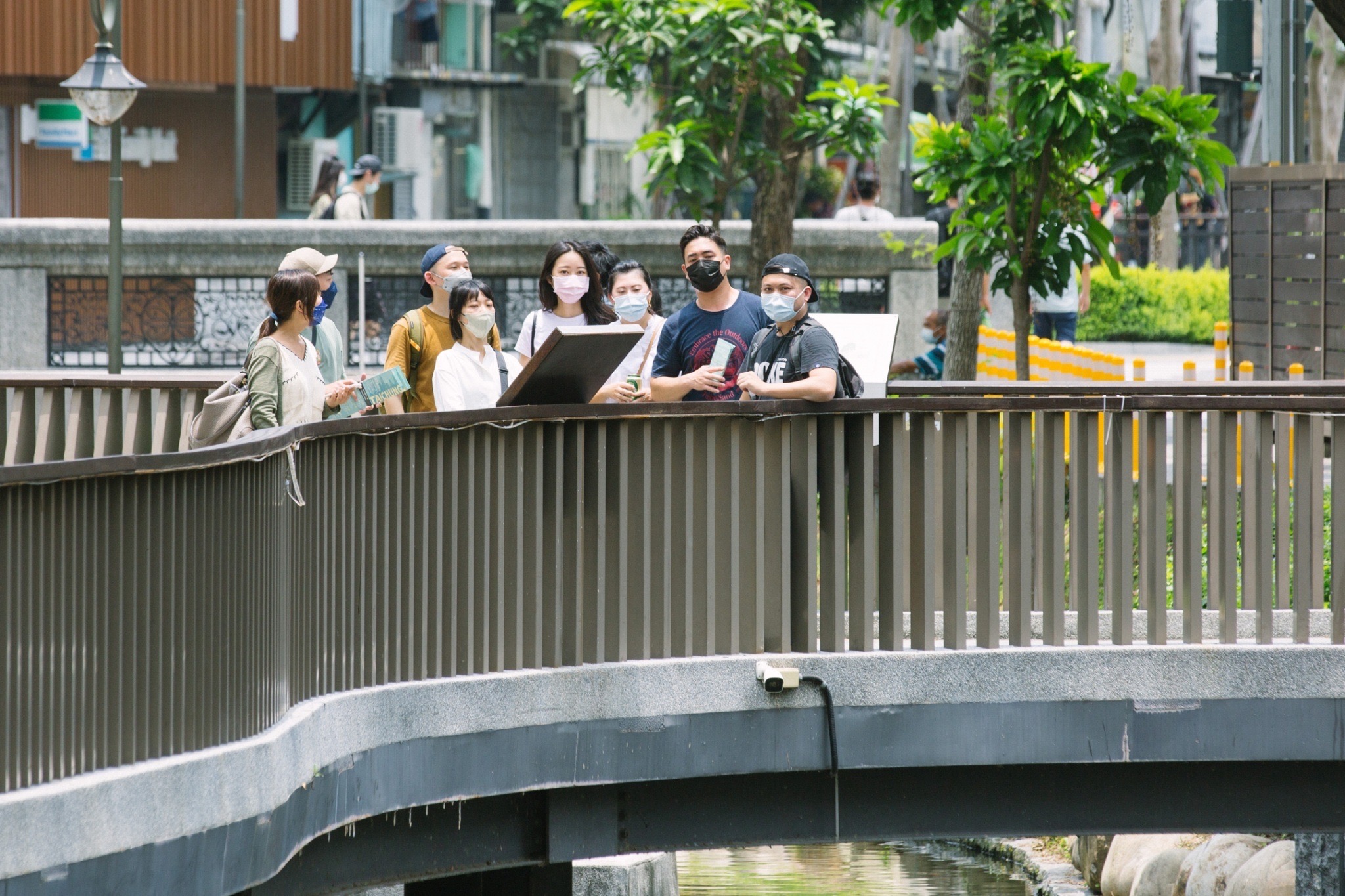
Sustainable travel in Taiwan has less to do with eco-labels than with two ordinary choices: how you move between places, and whose hands your money ends up in. Taiwan makes the first choice easy, because trains and buses reach most towns and city centres are built for walking. The second takes a little more attention, because it depends on where you eat and shop rather than on any certificate. This guide explains what that looks like in central Taiwan, using Taichung's old town, the older district around the main railway station, as a base.
Quick facts
- Where it is: central Taiwan, on the west coast, about an hour south of Taipei on the high speed rail (HSR), Taiwan's north-south bullet train
- How to get there: Taiwan Railway trains stop at Taichung Station, which is in the old town itself; the HSR stops at a separate station in Wuri, outside the centre, with a short connecting train
- How long to give it: half a day to a day on foot in the old town, two to three days if you add Sun Moon Lake, Lukang or the tea hills
- Getting around: walking, public bikes (YouBike) and city buses, with an EasyCard, Taiwan's tap-and-go transit card, covering most fares
- What it costs: market meals and street food are inexpensive by Western standards, and our self-guided city hunt is NT$399 per person, roughly US$13
- Best time: summer afternoons bring short heavy showers, and autumn through early spring is comfortable for walking
What does sustainable travel actually mean in Taiwan?
In practice, two things. The first is arriving and moving without a car, which is genuinely easy here between cities and inside them. The second is spending where the person serving you is also the person who runs the place. Taiwan has its own vocabulary for this: low-carbon travel, which mostly means trains, buses and bicycles, and regional revitalisation, a government term for helping small towns keep their own businesses and young people.
Neither of those is something you can verify from a label, and we would rather not tell you that any particular shop is sustainable. What we can tell you is what those shops are doing, which is usually simpler than the word suggests: opening at the same hour for decades, buying from the same supplier, training one apprentice at a time.
Why central Taiwan, and why an old town?
Taichung is one of Taiwan's largest cities, sitting in the middle of the west coast, which makes it a practical base for the whole region. The old town is the part where the city began before it spread outward, so the streets there were laid out for people on foot and the blocks are short.
It is flat, which matters more than people expect. You can cross the district in an easy walk, and the shops are mostly still selling to residents: hardware, embroidery, dried goods, breakfast. That is the honest reason we work here rather than at a viewpoint. A trade survives because someone still walks past and buys something.
What our guides notice
Three things, every week. First, shutters that look closed but are not: a workshop half-open at waist height, a sewing machine running behind it. Our guides have a running argument about which lane has the most of them.
Second, second floors. Walk the same street twice, once looking ahead and once looking up, and you will see different buildings: original window frames, iron grilles, old lettering under newer signs. Most visitors never look up, because they are wheeling a suitcase.
Third, the market benches. In the old market halls the stall holders sit on the same worn benches their customers use, and regulars know which stall opens early. We love that hour, honestly, and we are a little protective of it. The market runs on morning time, so stalls thin out as the day goes on.
If you ask about food origins, you will get an honest non-answer. A sun cake, the flaky local pastry filled with malt sugar, has at least two shops that each say they made it first, and that argument is older than our company. We tell travellers both versions and let them taste.
How do you spend a day this way?
Start at the station, in the morning, with your luggage left somewhere. Walk the stream that runs beside the old town, which was covered over for years and later reopened. Turn into the arcaded streets, where the covered walkways run shop to shop, and eat your first meal at a market rather than a food court. Spend the hot middle of the day under the arcades or inside an old building that someone still uses, then walk again when the light drops.
That is the whole method. No car, one district, money spent in rooms where the owner is standing.
What about Sun Moon Lake, Lukang and the rest of central Taiwan?
Some of it works well on public transport. Buses run to Sun Moon Lake, a mountain lake south of the city, from the HSR station, and Lukang, a historic port town, takes a train plus a local bus. Some of it does not: tea hills, indigenous villages and mountain roads keep timetables that assume you have a car, and building a day around two buses can cost you the day.
We are straightforward about the split. Our walking tours stay in Taichung's old town, because that is the only place we can honestly claim to know at walking speed. The driving part of central Taiwan is run by our travel agency, Formozaic, which does private day trips and chartered cars across Taichung, Nantou, Changhua, Yunlin and Miaoli.
What do people get wrong about this?
They assume it means giving something up. In central Taiwan the low-carbon version of the trip is usually the better one: the train arrives in the middle of the old town, and the food you want is a short walk from the platform.
They also assume a shop with no English menu does not want them. Pointing works, and so does showing a photo. Our guides see this every week, and the shopkeepers are usually more relaxed about it than the visitors are.
If you would rather not plan the walking part yourself, our guides run fixed departures in the old town on a tip-based model, where you decide afterwards what the walk was worth to you, and one person is enough for a tour to go ahead. There is also a self-guided version that leads you through the same district on your phone if you prefer to set your own pace.
Frequently asked questions
- Is it realistic to travel central Taiwan without renting a car?
- For cities, yes. Taichung's old town is a walking district, trains link the west coast towns, and buses reach Sun Moon Lake from the high speed rail station. Mountain areas and tea country are the exception, where bus timetables are thin and most travellers hire a driver for the day.
- Does sustainable travel in Taiwan cost more?
- Usually less. Trains and city buses are cheap, market meals cost a fraction of a hotel restaurant, and walking is free. The expensive parts of a Taiwan trip are typically car hire and intercity taxis, which are the parts you skip.
- How do I know whether a shop is actually locally run?
- Look at the counter. If the person taking your money is also the person making the food, if the hours are written by hand, and if the customers are greeting each other, you are in the right kind of place. Nobody can verify a label for you, so use what you can see.
- Is Taichung worth a stop if I only have a week in Taiwan?
- If you want one city where you can walk everything and eat well without planning, yes, and half a day is enough to decide. If your week is already built around Taipei and the east coast, Taichung works better as a lunch-to-evening stop on the way south than as a rushed morning.
- Do I need to speak Chinese to eat at markets and old shops?
- No. Pointing, photos and a translation app cover almost everything in central Taiwan. Younger staff often speak some English, and market vendors are used to visitors who order by gesture.
- When is the best time of year for walking in central Taiwan?
- Autumn through early spring is the most comfortable, with mild days and dry mornings. Summer is still workable if you walk early and late, since the afternoon showers are short and the arcaded streets give you cover.