
Do You Tip in Taiwan? A Taichung Guide's Answer (2026)
November 19, 2026・TC Time Walk, Taichung
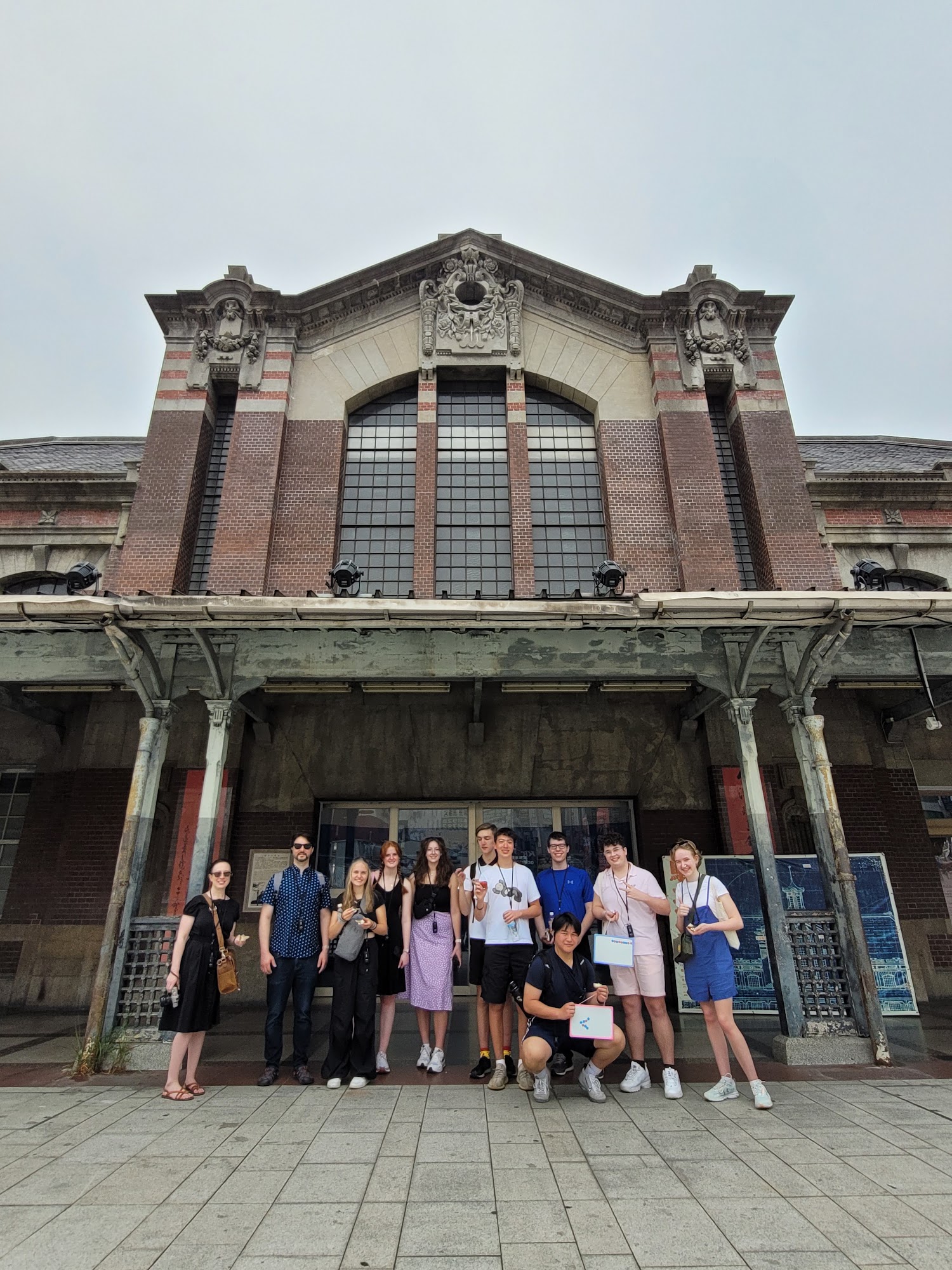
No, you do not tip in Taiwan in most situations. At restaurants, in taxis, at convenience stores and at night market stalls, the price you are told is the price you pay, and staff will often follow you to the door to return change you meant to leave behind. There are a few situations where a tip is normal rather than awkward, and guided experiences are the main one. This guide walks through each case, and explains how a tip-based walking tour works, since our own team runs one in Taichung's old town, the oldest part of the city, around the main train station.
Quick facts
- Restaurants: no tip expected. Some sit-down restaurants add a service charge to the bill instead, so look at the bottom of the menu.
- Taxis: no tip. Rounding up is a personal choice, not an expectation, and drivers will usually hand back change.
- Hotels: a small amount for a porter who carries your bags at a large hotel is the most commonly mentioned exception.
- Night markets, the evening street-food markets found in every Taiwanese city, and small shops: cash, the stated price, no tip. Many take cash only.
- Guided tours and private drivers: a tip is genuinely welcome here, and on some tours it is the entire payment model.
- Currency: New Taiwan dollars, written NT$. NT$100 is roughly US$3.
So you really don't tip at restaurants?
Really. Leaving money on the table is more likely to cause confusion than pleasure: someone will assume you forgot it. In a small family-run shop, the person who took your order is often the person who cooked the food and owns the place, and the transaction is treated as finished when you have paid what the menu says.
Some larger sit-down restaurants and hotel restaurants add a service charge to the bill. That is not a tip you decide on, it is a line on the bill, and it is printed on the menu where you can see it before you order. If you want to avoid the question entirely, the places where you are least likely to encounter it are also the places we walk past all day: small shops with handwritten price lists.
If you do want to leave small change, the phrase that saves everyone time is "bu yong zhao" (不用找), roughly "keep the change". Without it, someone will chase you down the street with your coins. We are not exaggerating.
What about taxis, hotels and delivery apps?
Taxi drivers do not expect a tip. The meter is the price. Some visitors round up after a long ride or when a driver has helped with luggage, and that is received fine, but nobody is waiting for it.
At hotels, tipping a porter is the one habit that transfers reasonably well from other countries. Housekeeping tips are not a widespread custom here.
Food delivery apps are their own small world: some offer an optional in-app tip at checkout. That is a choice inside the app, not something expected at the door.
What about tour guides and private drivers?
This is where advice online genuinely disagrees, and it is worth knowing why. Taiwan is not a tipping culture, so guides do not stand there expecting one. But guiding is also the one job where people regularly want to give something extra, and nobody will be offended if you do.
Two situations to separate. If you have booked a tour or a private driver at a fixed price, that price is the whole arrangement and a tip is a genuine extra. Trips outside the city that need a vehicle are handled by our travel agency rather than our walking team, and the same rule applies there: the quoted price is the price.
The second situation is a tour with no fixed price at all, which is what we run in the old town, and it works differently enough to explain properly.
How a tip-based walking tour actually works
Our old town walk has no ticket price. You book a place, you turn up, you walk for about two hours, and at the end you decide what the walk was worth and hand that to the guide in cash. One person is enough for the walk to run, because the departures are fixed: weekday evenings start at 19:00, and weekends at 10:00, 13:30 and 16:30.
The walk stays in the old town rather than the newer shopping districts further out, so nobody needs a car or a bus pass for it. The straight-line distance from the first stop to the last is under 400 metres. It takes two hours anyway, because every corner has something to stop for.
The question we cannot answer is the one everybody asks: how much. We will not name a number, because the moment there is a number it stops being a tip and becomes a price with extra steps. What we can tell you is that people give what the two hours were worth to them, that nobody is counting, and that turning up with no cash at all is the only version of this that gets awkward. Cash machines are easier to find near the station than in the middle of the walk.
What our guides notice
The small shops we walk past are mostly run by the family that owns them, often with one person at the counter who has done this job for decades. Money handed across that counter goes straight into that shop, with nothing in between. It is the shortest route your travel money can take.
What does not work at those counters is a tip. We have watched visitors try to leave extra coins for a bowl of noodles and watched the owner push them back across the counter, slightly bothered, as though a mistake needed correcting. If you want more of your money to stay in the old town, buying one more thing is the move that lands well: another small bag of pastry, a second bowl, something from the shop two doors down that is still making whatever it has always made. That is a sentence we enjoy writing, because it means the answer to "how do I support local shops here" is simply "eat more", which nobody has ever objected to.
If you want to say thank you without money
Three things work better here than cash, and we mean that honestly. Tell the guide which part stuck with you, because it changes how they tell that story next time. Leave a review that describes what actually happened, since small teams live on those. And buy something from one of the shops on the route while the owner is standing right there.
If a tip-based walk sounds like a reasonable way to see a city you have not been to before, our tip-based old town walk runs on fixed departures and takes a single traveller. If you would rather go at your own pace, the same old town has a phone-guided treasure hunt version, which is a fixed price rather than a tip, from NT$399 per person (roughly US$13).
Frequently asked questions
- Do you tip at restaurants in Taiwan?
- No. The menu price is the full price, and locals do not leave tips at restaurants, including expensive ones. Some larger sit-down restaurants add a service charge to the bill instead, which is printed on the menu. Leaving cash on the table will usually be read as money you forgot.
- Should I tip a tour guide in Taiwan?
- You do not have to, and no guide will expect it on a fixed-price tour. Guiding is the one job here where a tip is genuinely welcome, so if a guide made your day better, giving something extra is fine and will be received warmly. On a tip-based tour like ours there is no ticket price, so what you give at the end is the payment.
- Do taxi drivers in Taiwan expect a tip?
- No. The meter is the price, and drivers hand back change as a matter of course. Some visitors round up after a long ride or when the driver has helped with bags, which is received fine but never assumed. If you want the driver to keep the change, say "bu yong zhao".
- How much do you pay for a tip-based walking tour?
- There is no set amount, and we deliberately do not suggest one, because a suggested amount is just a price. People give what the two hours were worth to them, in cash, at the end. The practical advice is to carry some cash on the day, since there is no card machine on a walking tour.
- Do I need cash in Taichung's old town?
- Yes, bring some. Convenience stores, chain shops and larger restaurants take cards and transport cards, but many of the small family-run shops and market stalls in the old town are cash only. Withdrawing near Taichung Station before you start walking is easier than looking for a machine mid-route.
- Is it rude to tip in Taiwan?
- Not rude, just unexpected, and in a small shop it can read as a mistake the owner needs to fix. Nobody will be offended. If you want to give more to a place you liked, spending more there works better than leaving change behind.