
What Is a Sun Cake? Taichung's Pastry, Explained (2026)
October 6, 2026・TC Time Walk, Taichung
A sun cake, taiyang bing in Mandarin, is a round pastry with a flaky layered crust and a soft maltose centre, and it comes from Taichung, a city in the middle of Taiwan's west coast. The crust shatters when you bite it; the filling, which is malt sugar syrup rather than cream or paste, pulls slightly. Most visitors meet it as a boxed gift rather than a snack, because that is how pastry is usually bought in Taiwan. This guide covers what it tastes like, where to buy it on foot from Taichung Station, whether it survives a flight home, and why nobody agrees on who made the first one.
Quick facts
- What it is: a round pastry, flaky layered crust, soft maltose (malt sugar) centre, usually about the size of your palm
- Where it comes from: Taichung, central western Taiwan, about an hour south of Taipei on the HSR, Taiwan's high speed rail
- Where to buy it: several long-running shops along Ziyou Road, a few minutes on foot from Taichung Station in the old town, the grid of streets directly behind the station
- What it costs: a boxed set is usually a few hundred NT$, roughly US$10 to US$20, depending on the shop and the number of cakes, so check at the counter
- Does it travel: yes, the cakes are individually wrapped and keep for weeks, though each shop prints its own date
- Worth knowing: some recipes use lard, so ask at the counter if that matters to you
What does a sun cake actually taste like?
Sweet, but not as sweet as it looks. The crust is the point: thin layers of pastry that break apart and get everywhere, which is why the cakes come individually wrapped and why people eat them over a plate. The centre is maltose, a thick malt sugar syrup that tastes closer to barley than to honey, and in a fresh cake it is still soft enough to stretch.
The standard way to eat one in Taiwan is with unsweetened tea, which cuts the sugar. Some people pour hot water over a broken cake and eat it as a thin porridge. That sounds odd and is genuinely good on a cold morning.
If you have had a pineapple cake, the other Taiwanese gift pastry, expect something quite different. Pineapple cakes are small, square, dense and a little tart. Sun cakes are round, flaky and purely sweet.
Why is a sun cake a Taichung thing?
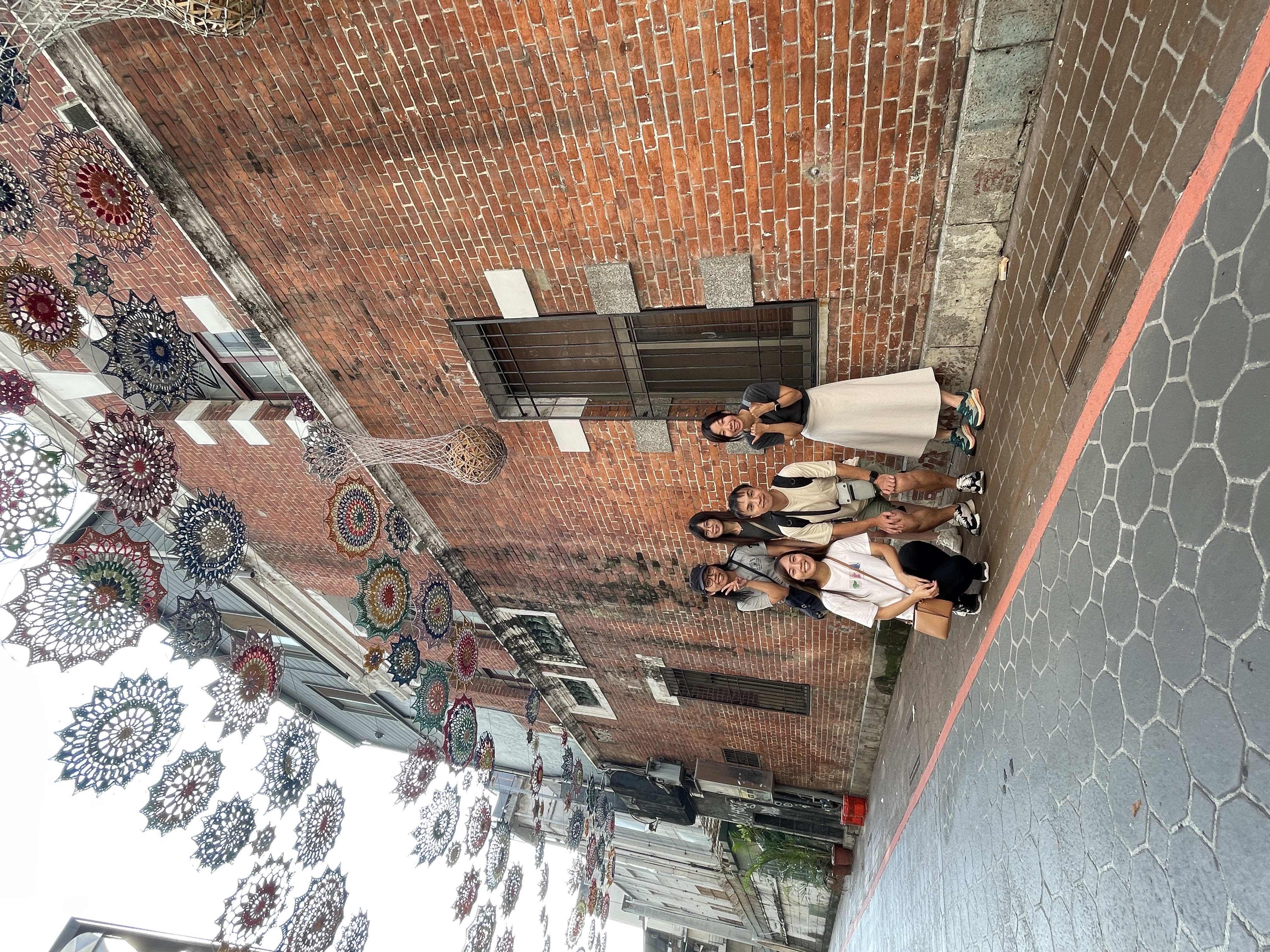
Honestly, the clearest evidence is the street itself. Walk a few minutes from Taichung Station into the old town and you reach a stretch of Ziyou Road where sun cake shops sit almost next to each other, some of them with counters that have clearly been in the same spot for a long time. Locals call it the sun cake street. Nowhere else in Taiwan has that concentration.
What we can say from walking it is narrow but solid: this is where the trade stayed. The shops are still shops, not museums with a cafe attached. People go in, buy a box for someone else, and leave.
One of the older buildings in the same part of the old town keeps a small exhibition about the pastry on its ground floor. Hours change, so check before you walk over.
Who made the first sun cake?
Two shops both claim it, and that argument is old enough that nobody is going to settle it with a receipt. You will find confident versions of the story online, each naming a different founder and a different decade.
We tell both versions on tour and let people pick. It is more interesting that way, and it is also the honest position: the recipe was shared, adapted and copied along one street for a long time, which is how most local foods actually happen.
So if a guide, a blog or a shop assistant tells you with total certainty which shop was first, treat that as a preference rather than a fact.
Where do you buy sun cakes near Taichung Station?
On foot, which is the simplest part of the whole trip. Leave Taichung Station, walk into the old town, and you are among the shops within about ten minutes. You do not need a taxi, a car or a tour.
A few practical things:
Most shops will hand you a piece to try before you buy. This is normal and you are not obliged to buy the biggest box afterwards.
Boxes come in several sizes and are stacked by size near the door. The smallest box is a reasonable amount for one person to carry home.
Some shops sell variations, with different fillings or a thinner crust. If you want the plain one, say original, or just point at the stack everyone else is buying.
Buying here rather than at the airport is the one decision that changes anything: the money stays with a counter in the old town, and you can see what you are buying before it is sealed.
Do they travel well?
Reasonably well. The cakes are individually wrapped, they are not refrigerated, and the boxes are built to be carried as gifts, which is exactly what you need for hand luggage. The crust will shed inside the wrapper, which is normal and does not mean the cake is stale.
Shelf life is printed on each box and varies by shop, so look at it if you are flying somewhere far. If you are going on to other countries, check what that country allows you to bring in, since rules on food in luggage change independently of anything a shop will tell you.
What our guides notice
Two things, and neither of them is about flavour.
The first is who is buying. Before long weekends the queues on that street are mostly locals buying for workplaces, relatives and in-laws, standing in line with a list. Sun cakes in Taiwan are less a treat you buy yourself than an object you hand to someone, which is why the box matters as much as the cake.
The second is the counters. The shops are narrow, the serving space is at the front, and the work happens behind it in full view. You can stand on the pavement and watch a transaction from start to finish: the sample, the choosing, the taping of the box, the receipt. We stop outside on tour not because the shops are photogenic but because the whole exchange is readable from the street, which is rare for an old trade.
Is it worth your time if you only have a few hours in Taichung?
Yes, because it costs you almost nothing. The shops are inside the walkable part of the old town, so buying a box fits into a half day along with the streets, the market and a stop for tea. It is not a destination; it is an errand you can enjoy.
What we would skip is the special trip. If someone offers to drive you across the city to one specific sun cake shop, the thing you are paying for is the claim about who was first, and that claim is not settled.
If you want the street explained while you walk it, we run a tip-based walking tour of the Taichung old town on a fixed schedule, and there is a self-guided phone version at NT$399 per person, roughly US$12, that moves you between the same blocks at your own pace.
Frequently asked questions
- What is a sun cake made of?
- A flaky layered pastry crust around a soft maltose filling, which is a thick malt sugar syrup. Some recipes use lard in the pastry, so ask at the counter if you avoid it. There is no cream or fruit inside a plain one.
- Is a sun cake the same as a pineapple cake?
- No. Pineapple cakes are small, square, dense and slightly tart. Sun cakes are round, flaky and sweet, with a syrup centre rather than a fruit paste. Both are sold as gift boxes, which is why they get confused.
- Where can I buy sun cakes in Taichung?
- On and around Ziyou Road in the old town, a few minutes on foot from Taichung Station. Several long-running shops sit close together there and most will let you try a piece first. You do not need transport to reach them.
- Can I take sun cakes home on a plane?
- Usually yes. They are individually wrapped, need no refrigeration and are packed to be carried. Check the date printed on the box, and check your destination's rules on bringing food in, because those change and no shop will know them.
- Which shop invented the sun cake?
- Two shops both claim it and the argument has never been settled. You will see different founders and different decades given online with equal confidence. We tell both versions on tour rather than picking one.
- Are sun cakes vegetarian?
- Not reliably. The filling is sugar based, but some pastry recipes use lard. If you need to be sure, ask at the counter before buying rather than assuming, since recipes differ from shop to shop.